
Welcome to the website of the Royal Tunbridge Wells Civic Society. The Society is an independent organisation
which campaigns for the conservation and improvement of this attractive town with its important heritage and rich cultural life.
- see more about our objectives and background;
- get the latest news on current issues;
- learn about Tunbridge Wells' greatest architect Decimus Burton;
- see what the Southborough Society has to say about our opposition to the plans to develop the Friendly Societies' Hall;
- download our latest Newsletter;
- check out our latest Publication (use the Publications tab to buy on-line);
- send us your comments on any of our activities or on current issues in the town.
OBITUARY
June Bridgeman CB (26th June 1932 - 19th April 2026)
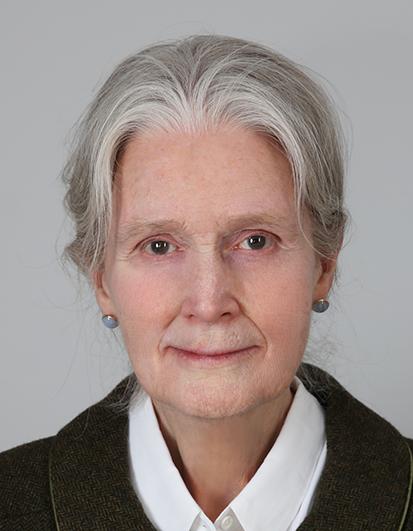
It is with great sadness that we have to report the death of one of the former members of the Executive Committee, June Bridgeman CB on Sunday 19th April 2026. June was a distinguished public servant, community leader, and tireless advocate for women's equality, safety, and education, whose life was marked by both national achievement and deep local commitment.
June began her long association with the Tunbridge Wells Soroptimists in 1966 while working at the Prices and Incomes Board. Her career in public service went on to include senior Whitehall appointments, notably within the Cabinet Office Think Tank and as Transport Director for London. In recognition of her national and international contributions to road and vehicle safety, she was appointed Companion of the Order of the Bath (CB).
Her dedication to equality was evident in her role as Deputy Chair of the Equal Opportunities Commission, where she built strong relationships with women's organisations across the UK and beyond. In 1995, she represented the Fawcett Society at both the United Nations Commission on the Status of Women in New York and the UN World Conference on Women in Beijing. She later served as one of three Commissioners on the three-year BSE Public Inquiry.
In 2001, June received a Women of Achievement Award from the European Union of Women, recognising her outstanding contribution to pan-European understanding and progress.
Before her marriage to Michael Bridgeman and the arrival of their five children, June also served as a Territorial Army Signals Officer, driving heavy lorries and developing expert rifle-shooting skills. Her commitment to public and community life extended into the Church, where as a Bishops' Selector for the Advisory Council on the Church's Ministry, she was involved in selecting the first women to train as deacons.
A passionate advocate for girls' education, June served as a Council member of the Girls' Public Day School Trust, a governor at several schools, and was made an honorary Fellow of Queen Mary Westfield College.
Her evidence-based approach informed influential reports on public safety and community wellbeing, addressing issues such as car park and taxi safety, spiked drinks, facilities for teenagers, recycling provision, public lavatory design, and litter reduction. She was also a founder member of the Kent Advisory Committee on Domestic Violence.
June's lifelong passion for local history led her to help found the Edenbridge Historical Society, the Friends of Woodbury Park Cemetery, and the Friends of Tunbridge Wells Cemetery, fostering historical, environmental, and educational engagement, particularly among local schoolchildren.
In 2021, June was one of one hundred women who were recognised as part of the #WhoIsShe celebration of the first centenary of Soroptimist International as having 'made a noteworthy contribution to society in the furtherance of the aims and objects of the organisation'.
In recognition of her exceptional service, June was awarded the Tunbridge Wells Borough Council Civic Medallion in 2022. The award acknowledged her outstanding contribution to community life and her ability to bring people together across backgrounds and interests to improve the town she loved.
Those who knew June remember her as astute, driven, and deeply thoughtful. She had a remarkable ability to anticipate emerging issues, ask probing questions, and inspire others to act. A gifted speaker and natural connector, she combined intellectual rigour with warmth and a strong sense of civic duty.
June Bridgeman's life exemplified the belief that individuals can make a lasting difference through service, insight, and determination. She leaves a legacy of progress, community spirit, and opportunity for others, truly embodying the sentiment that "women hold up half the sky."
Caroline Auckland 24/04/2026
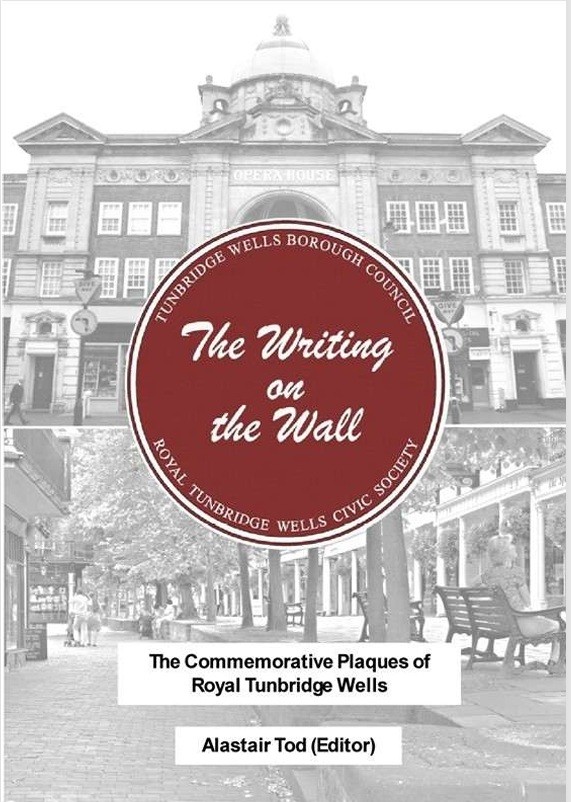
Updated booklet on the commemorative Plaques of Royal Tunbridge Wells now available to order
What does a pioneering female aviator have in common with the
inventor of Subbuteo, a founder of the RSPB, and a chap who spent
a fortnight one November in a tent in only his underclothes?
Signs on buildings to commemorate notable residents were first
erected in London in the 1860s and developed over time into the
now familiar blue plaques. In Royal Tunbridge Wells there are now
51 plaques in the Tunbridge Wells colour of claret. They were
funded by the council and by 'Royal Tunbridge Wells Together' but
researched and erected by the Civic Society.
This booklet marks their location and explains whom they
commemorate. They include not just 'the great and the good', but
those who have made a mark in other ways - reformers, inventors,
pioneers (male and female), even an anarchist and a courtesan. The
plaques are all visible from the public highway, though some are
inevitably less visible than others.
In A5 format it costs just £5.95. You can get your copy by clicking on the link above to our Publications page and ordering on-line.
Our next events for 2026:
Thursday 8th October 7.30pm at Tunbridge Wells Bridge Club, 40 London Road, Tunbridge Wells, TN1 1DL
Royal Tunbridge Wells Civic Society Awards Evening - presented by Dr David Wright.
Sunday 11th October 3pm to 5pm - at the Richard Burnett Heritage Collection, The Finchcocks Charity, Waterdown House, 51 Frant Road, Tunbridge Wells, Kent, TN2 5LE.
Katrina Burnett of The Finchcocks Charity has once again kindly agreed to host the Civic Society at 51 Frant Road, for a Schubertiade. So, what is a 'schubertiade'? Here is a contemporary description: 'Those were unforgettable evenings. We gathered in some friendly house. There was no ceremony. One arrived, greeted friends, poured wine, opened a book of poems. Then someone would say 'Schubert play us something'. At once the room changed. Conversation ceased. It was not a concert. It was friendship set to music.'
The cost is £30.00 per person to include canapes and drinks.
To book please click on the link below:
Finchcocks Event
or pay direct into our bank account:
CAF Bank 40-52-40, RTWCS 00017200, and reference with your name and initial - Finchcocks Event
or send a cheque payable to RTWCS to: John de Lucy, 28 Warwick Park, Tunbridge Wells, Kent, TN2 5TB.
If paying by cheque please make sure you include your phone contact details in case of query as there will not be any tickets issued for this event.